Welcome to our regular online bulletin bringing you news about the network and the wider world of stroke and neurorehabilitation |
| |
 As we come to the end of another challenging year in the NHS, we recognise the uncertainty that still lies ahead as our local and national systems evolve. The new NHS 10 Year Health Plan provides a clear focus and shared vision for improving our stroke and neurorehabiliation services. As always, we are stronger together and we will harness new opportunities and embrace the future, whilst remaining centred on the needs of our patients. As we come to the end of another challenging year in the NHS, we recognise the uncertainty that still lies ahead as our local and national systems evolve. The new NHS 10 Year Health Plan provides a clear focus and shared vision for improving our stroke and neurorehabiliation services. As always, we are stronger together and we will harness new opportunities and embrace the future, whilst remaining centred on the needs of our patients.
This Christmas, let’s take time to celebrate our achievements this year, appreciate one another, and recharge for what lies ahead. Wishing you all a joyful festive season and a hopeful start to 2026.
|
| |
|
Network news
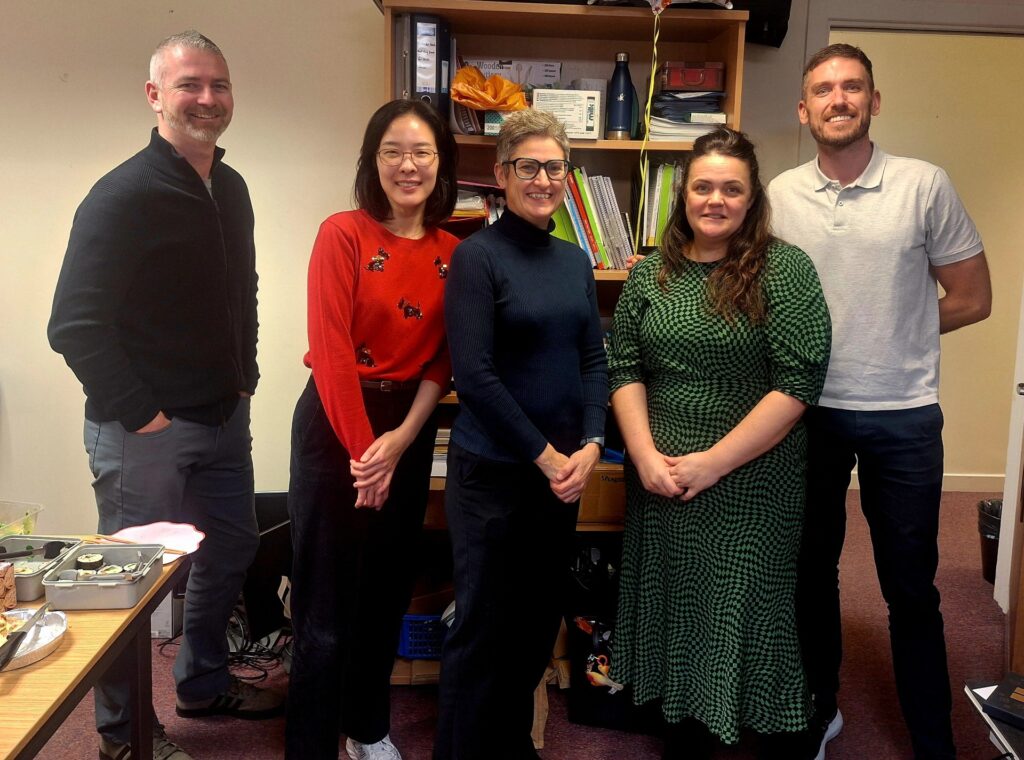 In December we will say goodbye to our Inpatient Rehabilitation Clinical Lead Rachael Collins (pictured second right) who has supported a wide portfolio of projects during the last 13 months. Her expertise has been invaluable in driving forward key projects including cardio respiratory and a subject close to her heart - Occupational Therapy cognition training. We have hugely benefitted from having Rachael on the team, and she will continue to support us in some specific areas in the coming months. In December we will say goodbye to our Inpatient Rehabilitation Clinical Lead Rachael Collins (pictured second right) who has supported a wide portfolio of projects during the last 13 months. Her expertise has been invaluable in driving forward key projects including cardio respiratory and a subject close to her heart - Occupational Therapy cognition training. We have hugely benefitted from having Rachael on the team, and she will continue to support us in some specific areas in the coming months.
We are delighted to announce that we have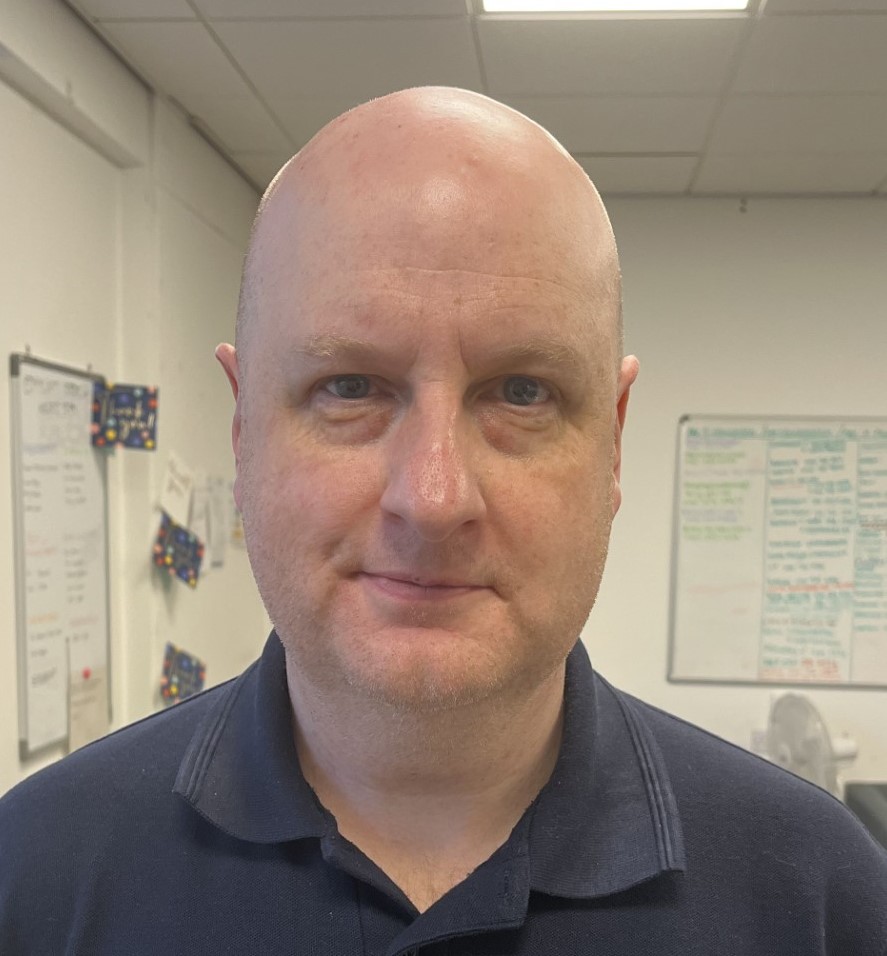 appointed Stuart McDarby as our new Community Lead. Stuart is a team lead in the Bury Community Stroke & Neurorehabilitation service, and brings a wealth of community and inpatient experience at a Physiotherapist. He will start his new role in early February on half a day a week, and we plan to re advertise for another to join him in the New Year. appointed Stuart McDarby as our new Community Lead. Stuart is a team lead in the Bury Community Stroke & Neurorehabilitation service, and brings a wealth of community and inpatient experience at a Physiotherapist. He will start his new role in early February on half a day a week, and we plan to re advertise for another to join him in the New Year.
The network is currently re-structuring to ensure our sustainbility in the future. We will provide further details of any changes to staff and clinical leadership roles in the New Year. |
| |
|
Acceptance and Commitment Therapy (ACT) training
On 11th November, nearly 100 clinicians from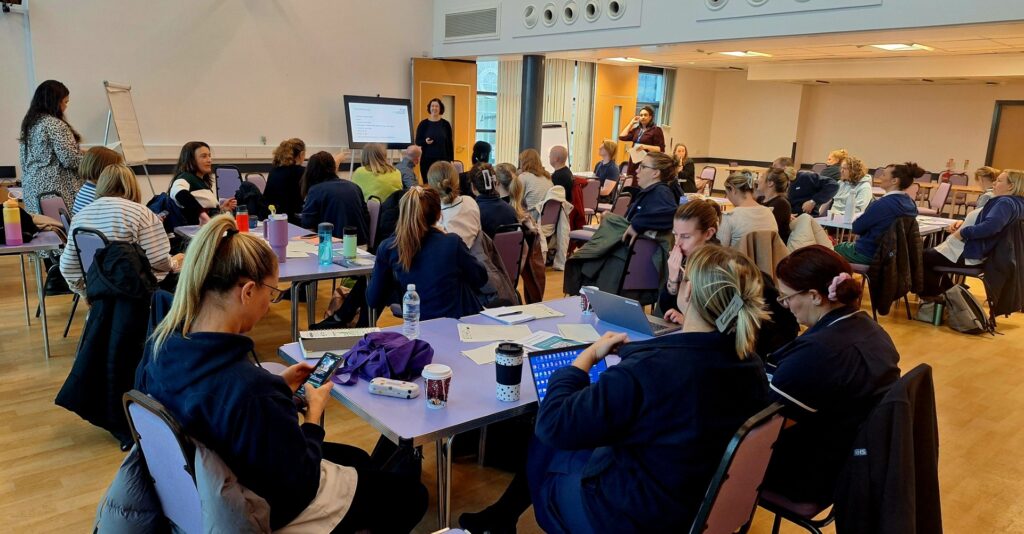 Greater Manchester stroke and neurorehabiliation teams benefited from ACT training delivered by Clinical Neuropsychologists and our Clinical Lead Rachael. Greater Manchester stroke and neurorehabiliation teams benefited from ACT training delivered by Clinical Neuropsychologists and our Clinical Lead Rachael.
ACT helps people react more flexibly to their difficult thoughts and feelings so they can move towards what is important to them, instead of getting stuck. The training taught local clinicians practical skills for when patients have difficulty engaging or seem ‘stuck’ in some way. Professionals can also use ACT skills to enhance their own self-care practices.
Topics included: difficult conversations using active listening and motivational interviewing; values-based goals; grounding techniques; self-care and documenting using ACT. Case studies demonstrated skills that can be used in work. Attendee feedback was very positive, especially for practical skills, although participants would have liked more time to explore them. |
| |
|
Patient and carer voice
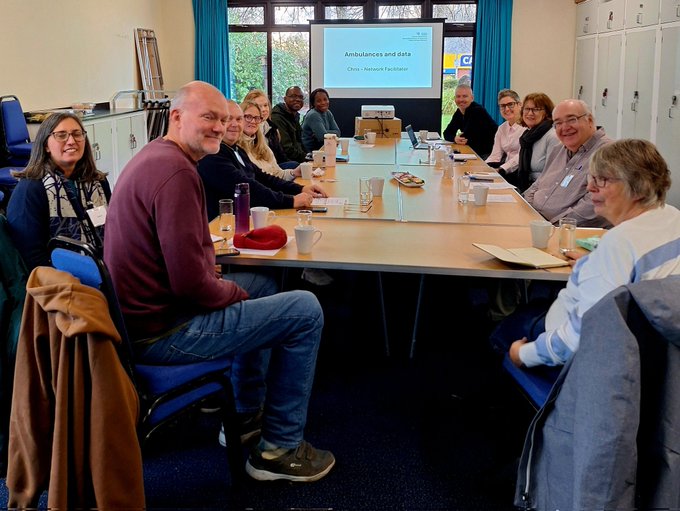
We had a full house at our last Patient & Carer Group meeting before Christmas, held in Stretford, Trafford. The group continues to thrive with a diverse membership who meet quarterly.
This year, the group has helped shape our thinking on topics including medicines management, spasticity and Parkinson's, and continues to ensure we prioritise and deliver patient centred projects. Please get in touch if your team want to come and share your improvement work or seek their input as they love having visitors! |
| |
|
Pathway updates
Spasticity management
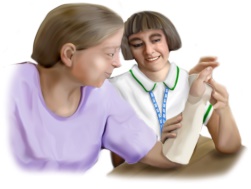 We have now completed our regional audit of services delivered by stroke and neurorehabilitation teams and the mammoth report is being digested by those who took part. There were many areas of good practice but also gaps. Some key findings were: We have now completed our regional audit of services delivered by stroke and neurorehabilitation teams and the mammoth report is being digested by those who took part. There were many areas of good practice but also gaps. Some key findings were:
- Most teams routinely consider spasticity
- Non-Medical Injectors are few and far between
- Stroke teams have poorer access to second and third-line interventions
- Many community teams lack formalised pathways linking to inpatient services
- Written patient information is not routinely offered by most teams
We will be holding a stakeholder event in the New Year to discuss the results and develop an action plan to address areas for improvement.
Multiple Sclerosis (MS)
Our Steering Group continues to meet regularly and recently discussed self-management of care and rehabilitation, improving information provision accessibility. The group also looked at participation in A Life in a Day - an immersive 24-hour experience simulating life with MS for healthcare professionals. recently discussed self-management of care and rehabilitation, improving information provision accessibility. The group also looked at participation in A Life in a Day - an immersive 24-hour experience simulating life with MS for healthcare professionals.
We’ve also set up a patient engagement task and finish group to co-develop a health equity assessment tool, which is helping us identify barriers and solutions. A patient engagement event with the MS Society and local services is planned in Central Manchester in December.
Functional Neurological Disorder (FND)
FND can be complex to diagnose and treat. The region currently has a postcode lottery in accessing community neurorehabilitation. We are supporting the Northern Care Alliance NHS FT in a pilot that will see FND patients accepted by some of its community teams. A wider stakeholder meeting will be convened early next year to review current pathways and practice as well as the training needs of staff.
Motor Neurone Disease (MND) emotional support
We’ve completed surveys with community who see MND patients and the MND Care Centre at Salford Royal to understand the emotional support they provide, as well as the training and support for staff. Responses are being collated, and a full report will follow once ready.
Alongside this, we co-developed a set of questions with people with lived experience for surveys and interviews with people living with MND and their carers. Work is also underway to create a regional and local directory of services to help healthcare professionals signpost patients and carers to appropriate support.
On the project team, Assistant Psychologist Jacob Camps has moved on to begin his doctorate but we’ve recruited a new person who will join in early January. Next steps include completing the report, identifying gaps in provision, and exploring opportunities to reduce inequities across the region.
|
| |
|
Bolton Neuro Voices Hydrotherapy Programme
When? February/March 2026 - initial assessment early February, pool sessions 11th February-11th March in the afternoon, final assessment week commencing 16th March.
Where? Bolton One Hydrotherapy Pool, Sir Jason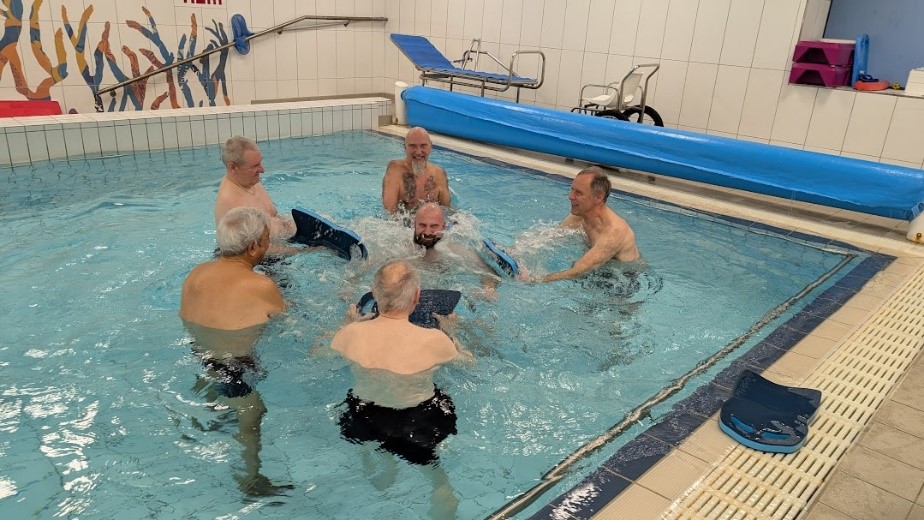 Kenny Centre, Moor Ln, Bolton BL3 5BN Kenny Centre, Moor Ln, Bolton BL3 5BN
Who is it for? People living with neurological conditions in Greater Manchester
Why is it beneficial? Living with long-term neurological condition can make it challenging to access mainstream physical activity programmes. This is designed to help move, connect, and feel good together.
What to expect? 1 dryland assessment prior the pool sessions, 5 pool sessions, dryland assessment after completion of the programme
Fee: £35 per person per course
Find out more: email: physiotherapy@greatermanchester.ac.uk or bnv@gmail.com
Participants said: “My legs felt lighter…I have been able to transfer more easily…Today I got into the car without help” and “…took me outside my comfort zone and challenged me… absolutely brilliant…” |
| |
|
Network grant success
We have recently secured funding to support collaborative pathway improvement for two neurological conditions, building on our model of success in MND. collaborative pathway improvement for two neurological conditions, building on our model of success in MND.
 We have been awarded ~£29,000 by the pharmaceutical company Roche Products Limited to support our MS initiative, NB: the company will not have any involvement. We have also been awarded £12,000 by Parkinson's UK for a similar project in this condition which kicked off in December. We have been awarded ~£29,000 by the pharmaceutical company Roche Products Limited to support our MS initiative, NB: the company will not have any involvement. We have also been awarded £12,000 by Parkinson's UK for a similar project in this condition which kicked off in December.
The funding from each grant will support network staff time to bring together and oversee work led by key stakeholders including clinicians, local charities and people with lived experience. The initatives will focus on low/no cost change maximising existing resources/assets that enhance patient outcomes and quality of life, whilst reducing health inequalities. |
| |
|
Trafford partners with Sale Sharks
Trafford Community Stroke & Neurorehabilitation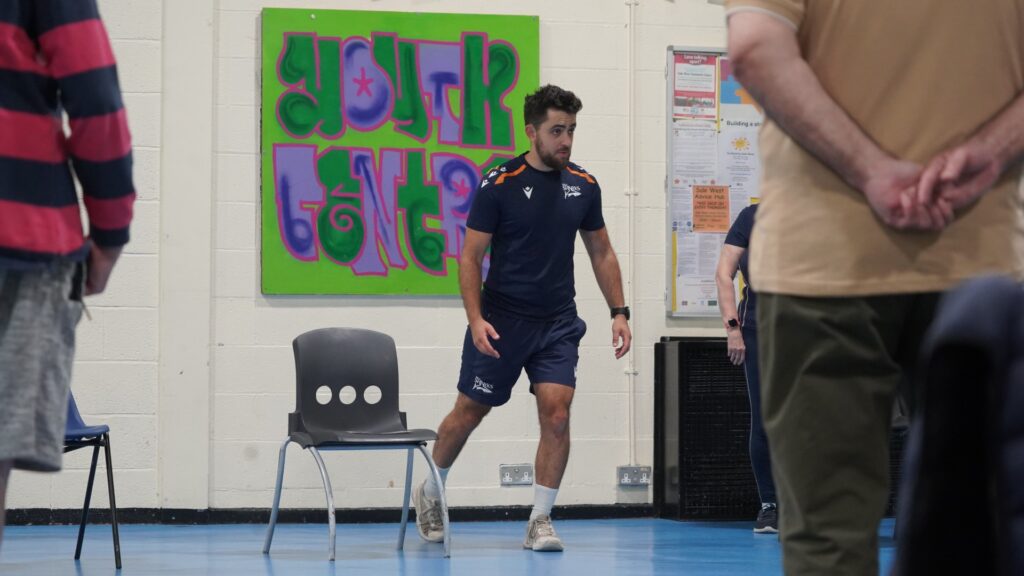 team have joined forces with the Sale Sharks Foundation to create a long-term exercise group for people with Parkinson's. The team observed a growing number of referrals as individuals need to increase and maintain activity levels when not receiving rehabilitation to prevent deconditioning and development of new neurological symptoms. team have joined forces with the Sale Sharks Foundation to create a long-term exercise group for people with Parkinson's. The team observed a growing number of referrals as individuals need to increase and maintain activity levels when not receiving rehabilitation to prevent deconditioning and development of new neurological symptoms.
The team thought the initiative could improve patient self-management, health outcomes and step-down pathways from rehabilitation input. They aim to also reduce referrals to the team and step up access for referrers. Data to assess impact is being collated and will be reviewed at 6 and 12 months.
The new group started in May and runs for an hour each Wednesday in Sale, with a chance to be social whilst enjoying refreshments at the end. Importantly it is also free! Participants have found it to be a really friendly, inviting environment and feel it has helped motivate them to keep active. The team have found it rewarding collaborating with the Sale Sharks Foundation and the neighbourhood team in Trafford. |
| |
|
Brain haemorrhage podcast
Our Facilitator Chris Ashton was recently invited to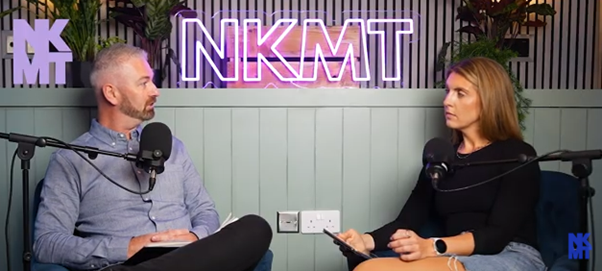 take part in a podcast with the Natalie Kate Moss Trust. The charity is devoted to preventing lifestyle related brain haemorrhages from occurring, whilst generating funds to support more research. take part in a podcast with the Natalie Kate Moss Trust. The charity is devoted to preventing lifestyle related brain haemorrhages from occurring, whilst generating funds to support more research.
Chris discussed the “golden hour” for stroke patients and why timely care is so critical. He also shared some of the current research he is involved with that was presented at last year’s UK Stroke Forum. |
| |
|
Greater Manchester Neurogenic Bladder and Bowel Service
In late October, our Facilitator Cillian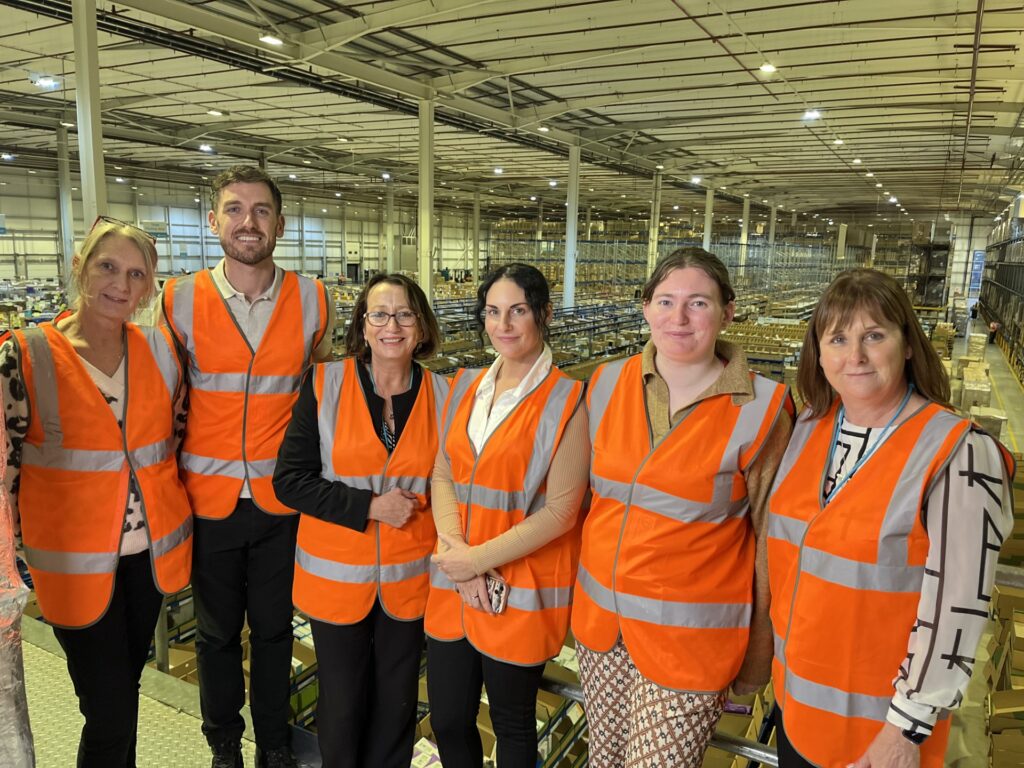 attended the Greater Manchester Neurogenic Bladder and Bowel Service Experience Day, hosted by Coloplast at their headquarters in Peterborough. The company are a leading developer and supplier of products for personal and private medical conditions such as continence. attended the Greater Manchester Neurogenic Bladder and Bowel Service Experience Day, hosted by Coloplast at their headquarters in Peterborough. The company are a leading developer and supplier of products for personal and private medical conditions such as continence.
The event showcased the collaborative work which resulted in a gold-standard pathway for the region and in January a new dedicated service was launched. We are very proud of our collaboration and we recently won an award from Bladder and Bowel UK for the initiative.
The visit demonstrated how Coloplast supports the new service, from administrators managing diaries and call handlers following up with patients, to the warehouse where products are packaged and shipped. A highlight was hearing from a patient who shared how accessing the service has improved their health and wellbeing, describing the approach as highly person-centred and holistic. |
| |
|
Training and education
As part of wider review of the network, we recently stood down our Worksforce Development Subgroup with this area now discussed at our other forums. We are currently undertaking a training needs analysis of all teams to identify priorities for next year.
We offer a wide programme of face to face and online events, those hyper linked are open for bookings. You can view all our previously recorded webinars on our YouTube channel, with details of how to access restricted content at the bottom in the archive section. Our training website pages are also a useful source of information and include our events, Elearning packages, online resources and course information.
Introductory level
- Fairfield General – 24th June 2026
- Stepping Hill – 12th December 2026
Experienced level
We are finalising events for 2026 with topics informed by our training needs analysis.
Other training
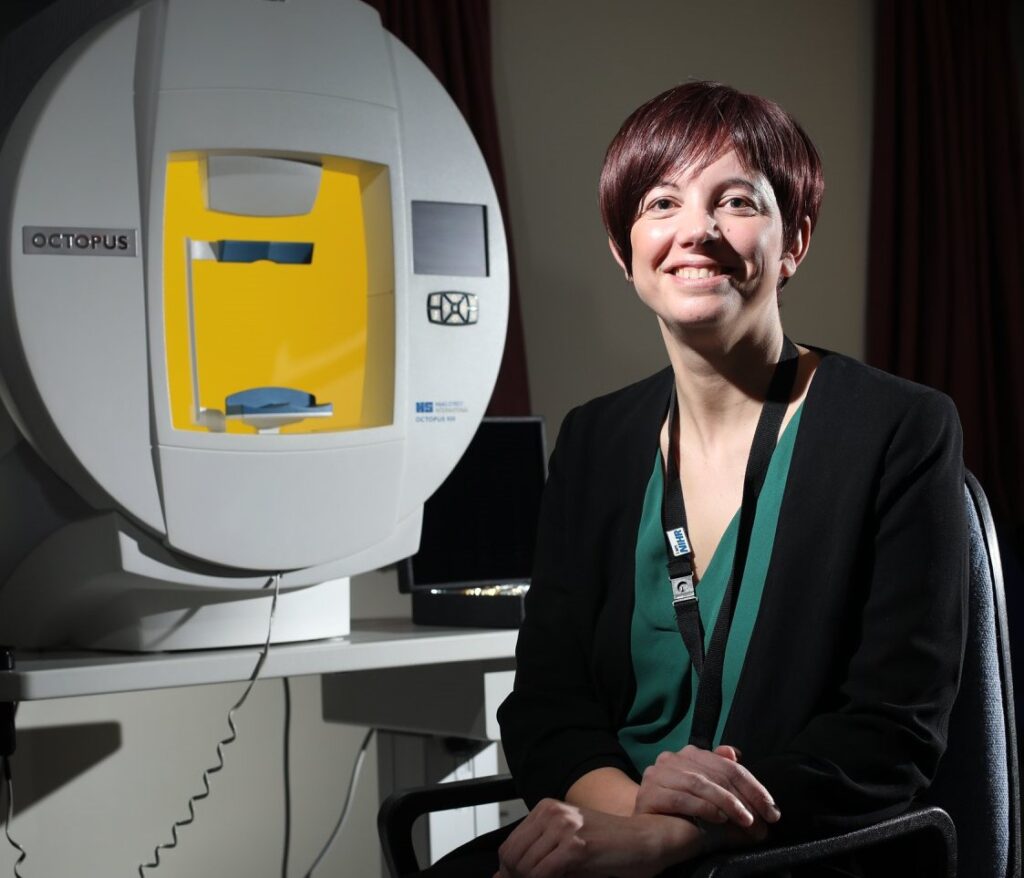
Local academic orthoptists Drs Claire Howard (pictured left) and Lauren Hepworth will be delivering a BIOS driving focused webinar on 13th January entitled Understanding Responsibilities When Reporting Visual Concerns To DVLA/DVA. You can book your place here.
The Cheshire and Merseyside Rehabilitation Network offer a range of education opportunities throughout the year which can be viewed on their webpages. They offer webinars and other foundation and masters courses on complex rehabilitation. Forthcoming training includes: Network offer a range of education opportunities throughout the year which can be viewed on their webpages. They offer webinars and other foundation and masters courses on complex rehabilitation. Forthcoming training includes:
- 1-2pm, 8th January: Introduction to UKROC and CMRN webinar
- 2 days 5th & 26th February: Complex Rehabilitation in the Multidisciplinary Context: Foundation Level at the Walton Centre
- 1.30-3pm, 5th March : Neurological Conditions and Pathologies: Polytrauma webinar
- 1-2pm 12th March: Introduction to UKROC and CMRN webinar
Click here to register.
The West Yorkshire and Harrogate Integrated Stroke Delivery Network has developed a Personalised Care Training for Stroke Staff module available on the Stroke-Specific Education Framework (SSEF) platform:
- Core (UKSF Registration Number 29594) – Ideal for those new to personalised care, focusing on the fundamental principles of person-centred stroke support.
- Intermediate (UKSF Registration Number 29610) – Designed for professionals seeking to deepen their understanding of personalised stroke care and apply it effectively in practice.
- Expert (UKSF Registration Number 29611) – Tailored for experienced professionals aiming to refine and extend their expertise in delivering high-quality, personalised stroke management.
You can access the training at: Personalised Care Training Package Launch |
| |
|
After Matters
We have been contacted by Maxine, co-founder with another mum called Louise of a relatively new charity called After Matters. They met when their sons, aged 17 and 18, at the time, were rushed to Salford Royal Hospital for emergency lifesaving surgery after sustaining traumatic brain injuries in separate, unrelated incidents. another mum called Louise of a relatively new charity called After Matters. They met when their sons, aged 17 and 18, at the time, were rushed to Salford Royal Hospital for emergency lifesaving surgery after sustaining traumatic brain injuries in separate, unrelated incidents.
Following their experience, they have set up the charity to support for young people (16-25 years) living with an acquired brain injury in Greater Manchester. They offer information and support, as well as grants of £50-500 for those affected. You can get in touch at: maxine@aftermatters.org.uk |
| |
|
Manchester Neuromuscular Research Group
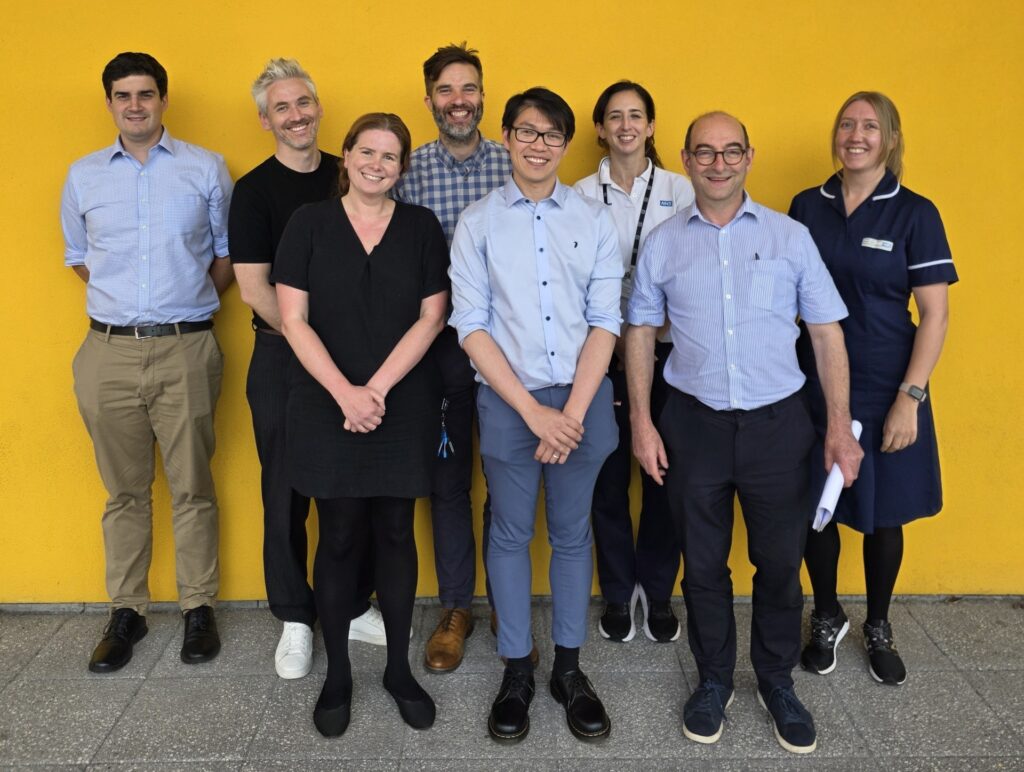 The group had a very successful launch event in November. It was a fantastic day which facilitated networking and collaboration across academic, health and charity sectors. Attendees were treated to a variety of talks on neuromuscular research developments and left inspired to develop new connections and projects. The group hope that this will produce real, meaningful benefit to people living with neuromuscular disease in Manchester and beyond. The group had a very successful launch event in November. It was a fantastic day which facilitated networking and collaboration across academic, health and charity sectors. Attendees were treated to a variety of talks on neuromuscular research developments and left inspired to develop new connections and projects. The group hope that this will produce real, meaningful benefit to people living with neuromuscular disease in Manchester and beyond.
|
| |
|
World Stroke Day
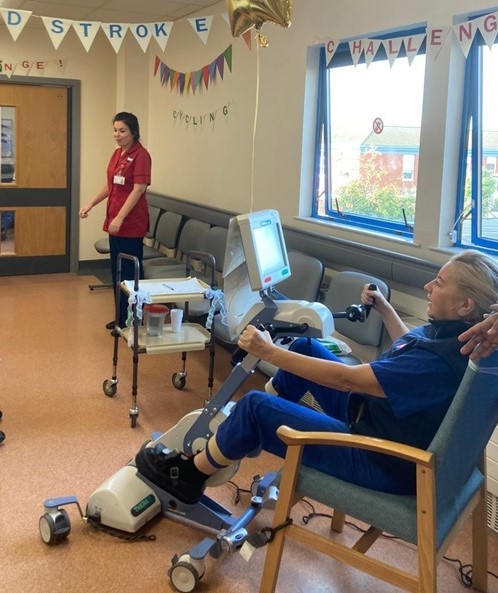 To mark the event at the end of October, Stepping Hill Hospital stroke service set up a series of engaging challenges across both wards to raise awareness of the importance of intensive rehabilitation. Staff, patients and relatives all took part, demonstrating the power of teamwork, perseverance and intensity of rehabilitation in stroke recovery. Together, participants cycled an incredible 96 km on the theratrainer, equivalent to cycling from Manchester to Blackpool, and also completed a remarkable 8000 sit to stands on each ward. To mark the event at the end of October, Stepping Hill Hospital stroke service set up a series of engaging challenges across both wards to raise awareness of the importance of intensive rehabilitation. Staff, patients and relatives all took part, demonstrating the power of teamwork, perseverance and intensity of rehabilitation in stroke recovery. Together, participants cycled an incredible 96 km on the theratrainer, equivalent to cycling from Manchester to Blackpool, and also completed a remarkable 8000 sit to stands on each ward.
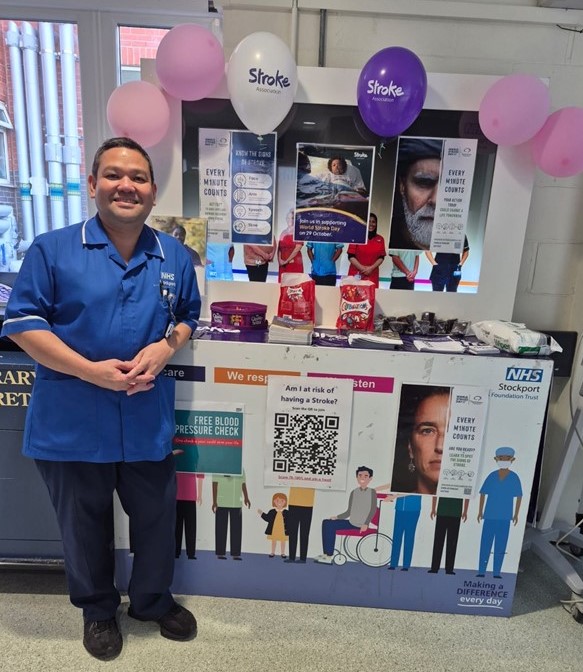 The events highlighted the physical intensity needed for stroke rehabilitation whilst celebrating the determination and community spirit that drives recovery every day on the wards. Specialist Stroke Nurses also held an education stand near the restaurant and took physical observations whilst raising awareness of risk factors using quizzes and resources. The events highlighted the physical intensity needed for stroke rehabilitation whilst celebrating the determination and community spirit that drives recovery every day on the wards. Specialist Stroke Nurses also held an education stand near the restaurant and took physical observations whilst raising awareness of risk factors using quizzes and resources.
|
| |
|
Speakeasy funding success
The aphasia charity have been awarded a GM Moving grant of £7,000. The funding will build on a previous project (approx. 15 years ago) that developed an aphasia friendly paper resource for a walk around Bury. The project was nationally recognised and received an award at the time. awarded a GM Moving grant of £7,000. The funding will build on a previous project (approx. 15 years ago) that developed an aphasia friendly paper resource for a walk around Bury. The project was nationally recognised and received an award at the time.
The new initiative will aim to create digital and printable walking guides for parks and walkways across all localities in the region. Resources will be co-designed with support from people with aphasia and physical disabilities. Speakeasy, with support from the network, will link in with local community services to help identify routes and considerations needed for the resource which will be shared widely once complete. |
| |
|
BBC Radio Manchester visit stroke units
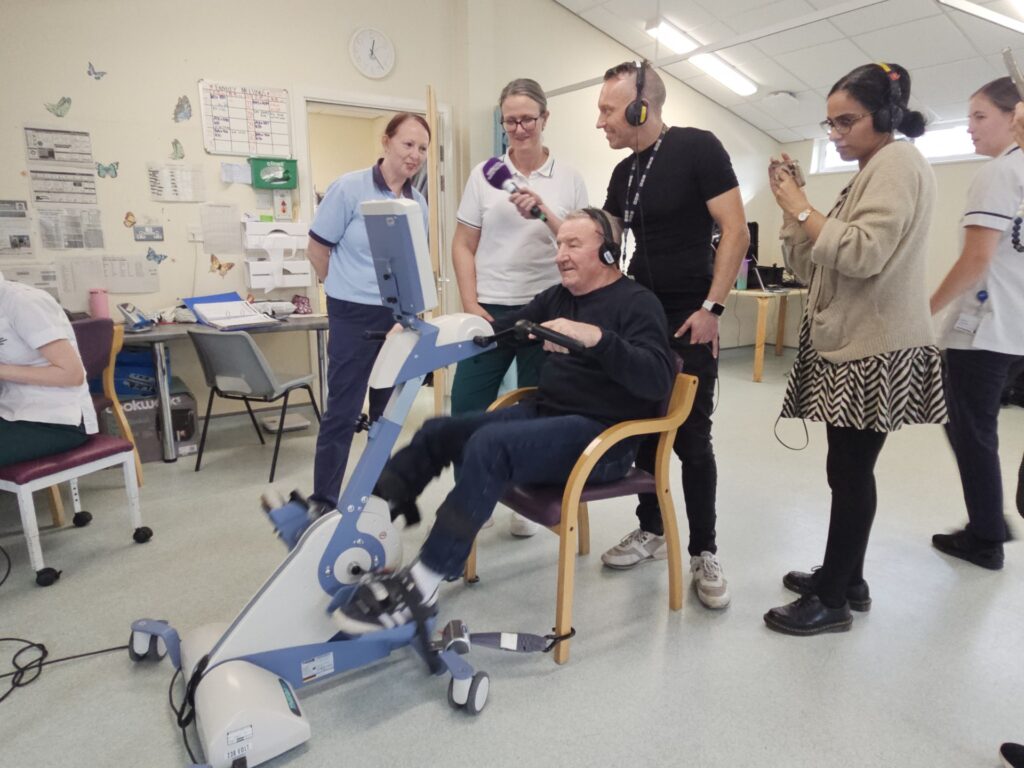 Presenter Mike Sweeney broadcast from the Stepping Hill Hospital stroke unit on the 23rd October, following a similar visit to Salford Royal earlier in the month. Presenter Mike Sweeney broadcast from the Stepping Hill Hospital stroke unit on the 23rd October, following a similar visit to Salford Royal earlier in the month.
BBC Radio Manchester had a number of programmes during World Stroke Month, and Mike Sweeney drew on his own experience of having a stroke earlier in the year.
Both radio programmes included interviews with stroke unit colleagues, volunteers and patients. At Stepping Hill Hospital, Mandy gave an insight into stroke nursing, including her own experience of stroke in the family. Ruth, a patient on the stroke unit shared her story and Mike was put through his paces on their exercise equipment (pictured above). Volunteer Linda, together with therapy dog Archie, explored the comfort pet therapy can provide for stroke patients. At the end of the visit, Mike was surprised by being presented with a stroke ambassador certificate. |
| |
|
Help navigating our website
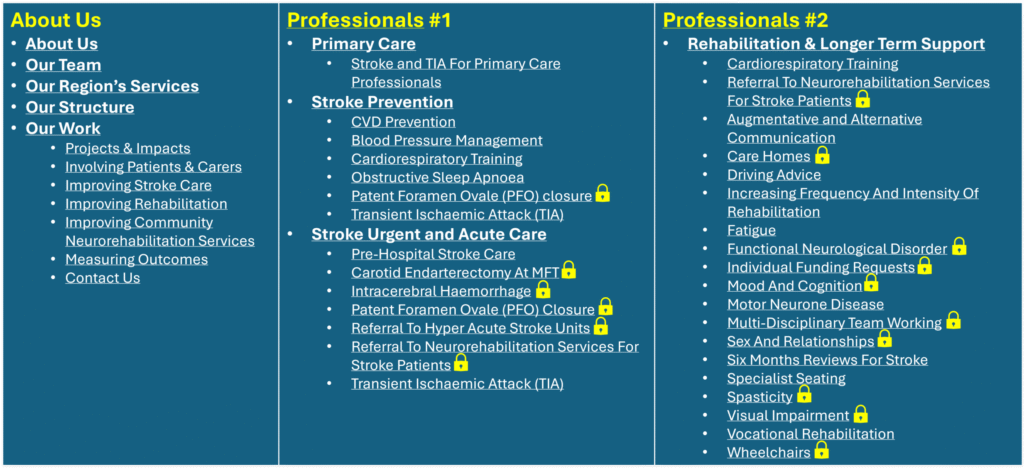
Our website contains a large amount of information mostly aimed at professionals with some pages more patient/public facing. To help users understand what is available, we have devised an interactive infographic with embedded hyperlinks to support navigation around the different sections.
Some sections (denoted by a padlock) are restricted to registered users who have then logged in. We only grant registration to professionals from the public sector (i.e. NHS, local authority etc), voluntary sector and academia who sign up using their professional email address. You can download the infographic using this link. |
| |
|
Stroke Association news
Sing4Stroke
One standout moment was Summer’s campaign during awareness month in May which received extensive media coverage. Summer's story highlights the reality of being a young stroke survivor and is raw, honest, and deeply moving. Working with Summer, the charity shared the emotional truth of her journey, and she spoke openly about the challenges of navigating the media spotlight.
She said: “I’m still healing, but singing gave me a voice again. It gave me hope. It was like being a baby—I had to learn everything from scratch. Anything we played, I remembered the lyrics to, even if I didn’t recognise my own mum. It was all very strange. My motto during recovery has been, ‘If I can’t do it today, I’ll do it tomorrow,’ and that’s what I’ll keep living by.”
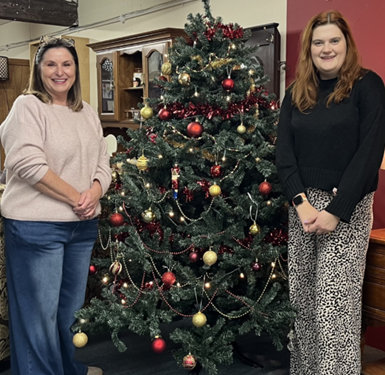 In other news, Lucy and Jackie used their volunteering day to support Emmaus Mossley, a charity that helps people experiencing homelessness. They set up a Christmas event—a great example of how our team connects with the wider community and lives our values beyond the workplace. In other news, Lucy and Jackie used their volunteering day to support Emmaus Mossley, a charity that helps people experiencing homelessness. They set up a Christmas event—a great example of how our team connects with the wider community and lives our values beyond the workplace.
|
| |
|
Think Ahead turns 25!
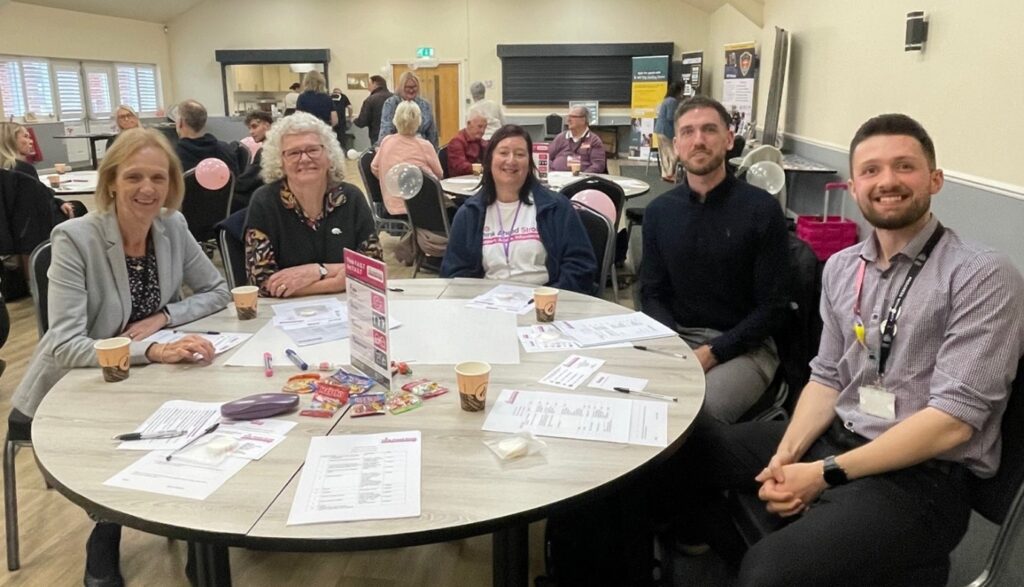 We were honoured to be invited to Wigan based stroke charity Think Ahead’s 25-year anniversary event in October. We had the opportunity to present about what we do and connect with a wide range of attendees including staff and local stroke survivors and carers. The event was a vibrant celebration of collaboration and fantastic community services. We were honoured to be invited to Wigan based stroke charity Think Ahead’s 25-year anniversary event in October. We had the opportunity to present about what we do and connect with a wide range of attendees including staff and local stroke survivors and carers. The event was a vibrant celebration of collaboration and fantastic community services.
Think Ahead was founded in 2000 and provides support and advice to stroke survivors and their families in Wigan. Their work includes peer mentoring, wellbeing programmes, and social activities that rebuild confidence and connection after stroke. It was inspiring to see everyone in the room discussing key topics like emotional support and how we can improve stroke care through joined-up working across health, social care, and the voluntary sector.
It’s clear that the most important voices in shaping services are those of the people who use them. Think Ahead exemplifies this principle, and it’s been a pleasure to work in close partnership with such a fantastic charity over the years. |
| |
|